 Desh in Last 24Hr
India-Japan LUPEX mission readies 350 kg rover to probe lunar south pole for water
Japan’s JAXA unveiled a roughly 350 kilogram rover prototype for the India-Japan LUPEX (Chandrayaan-5) mission that will search for water and ice down to about 1.5 metres below the lunar surface at the Moon’s south pole. The lander is being developed by ISRO and launch is planned on Japan’s H3 rocket in 2028.
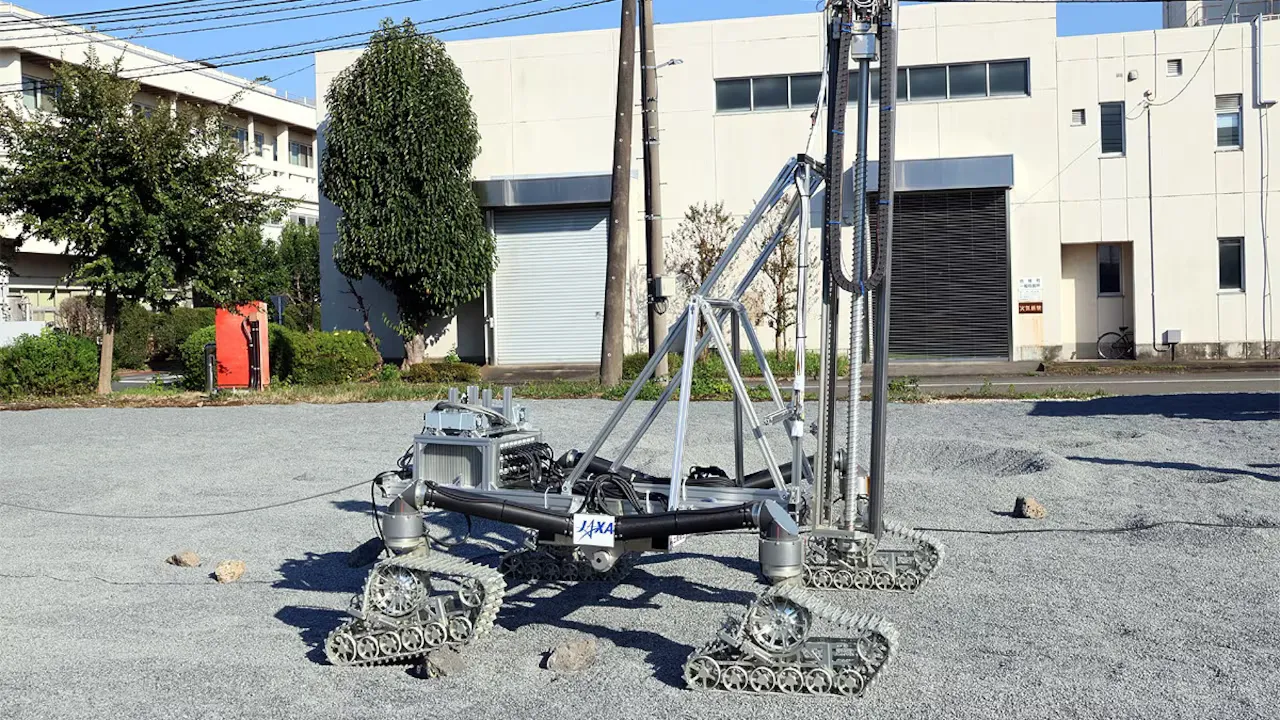
Japan Aerospace Exploration Agency (JAXA) displayed a prototype of the LUPEX rover on November 25, 2026, a vehicle weighing about 350 kilograms that will operate on the Moon’s south polar region to look for water and ice. The mission, known as Chandrayaan-5 or LUPEX, is a joint India-Japan effort with the lander provided by the Indian Space Research Organisation (ISRO).
LUPEX is planned for launch in 2028 on Japan’s H3 rocket from Tanegashima Space Center. The total mass at launch will be about 6.5 tonnes and nominal surface operations are set for three and a half months, with the option to extend up to one year if conditions permit.
The rover is designed to probe beneath the surface as well as study surface material: it will drill or otherwise sample to about 1.5 metres depth to analyse subsurface material rather than only taking images or surface-level measurements. JAXA said the rover will carry seven scientific instruments to investigate lunar soil and the local environment.
Rover design and instruments
The prototype shown at JAXA’s Chofu Aerospace Center uses crawler tracks rather than wheels to traverse rough and uneven lunar terrain. During the demonstration, the rover drove over an artificial lunar surface. The mission teams from ISRO and JAXA will plan the rover’s route around the landing site to enable experiments, measurements and battery recharging.
Among the instruments described are a ground-penetrating radar to map subsurface structure and a neutron spectrometer to detect hydrogen in the soil, which can indicate the presence of water or ice. ESA and NASA will also contribute scientific instruments to the mission.
Why the lunar south pole matters
Scientists consider the Moon’s south pole important because permanently shadowed, very cold regions there may have preserved water ice for billions of years. Determining how much water exists, its depth and distribution requires direct, in-situ measurement both at the surface and below ground.
“近日、走行試験の動画も公開しますのでお楽しみに✨️”
The LUPEX mission aims to clarify whether water ice is present in those cold, dark areas and in what form, which has implications for future human exploration and in-situ resource use such as producing oxygen and rocket fuel from lunar water if feasible.
Topics
- space
- lunar-mission
- LUPEX
- ISRO
- JAXA